

OUR STATEMENT
VISION
We want to keep pioneering the plant based scene in Denmark.
We believe that by posing a unique, positive and attractive approach to the vegan narrative, we continue to dissolve stereotypes, and exceeds expectations.
MISSION
We will continuously create places and dishes that are exciting, have a story, and focus on quality.
We question conventional methods and remind people about the bigger picture. Our choices matter.
We see the good in people, and believe that by bringing them together we can learn how to move forward together.
VALUES
Our projects are shaped by considered choices, from the ingredients we source and the suppliers we work with to how we approach waste, materials and design.
As a company we do not preach, nor are we perfect - but we are honest, inquisitive and determined.

OUR EFFORTS
Our approach is about making considered choices throughout the restaurant, understanding where our ingredients and materials come from, working closely with the people who supply them, making the most of what we use and continually looking at where we can do things better. It shapes everything from the food we cook and the drinks we serve to delivery, preparation, waste, materials and design.
Our menu follows the seasons, with a focus on local produce where possible. In the kitchen and bar, we look for creative ways to make the most of the ingredients we use. Off-cuts become powders and garnishes, spent wine finds its way into sauces, and even banana peels are used for cocktail infusions.
Most of our suppliers are located within a two-hour drive of the restaurant, with many just a 15-minute bike ride away.
We don’t claim to be perfect. We are curious about where we can improve and continue to develop the way we source, cook and work across the restaurant.

Did you know we co-own our own mushroom farm? Funga Farm is an organic urban mushroom farm in Copenhagen, growing unique, craft mushrooms.
We believe mushrooms are a mighty force to be reckoned with, which is why they play such an important role in our kitchens and our approach to plant-based food.
FORAGING
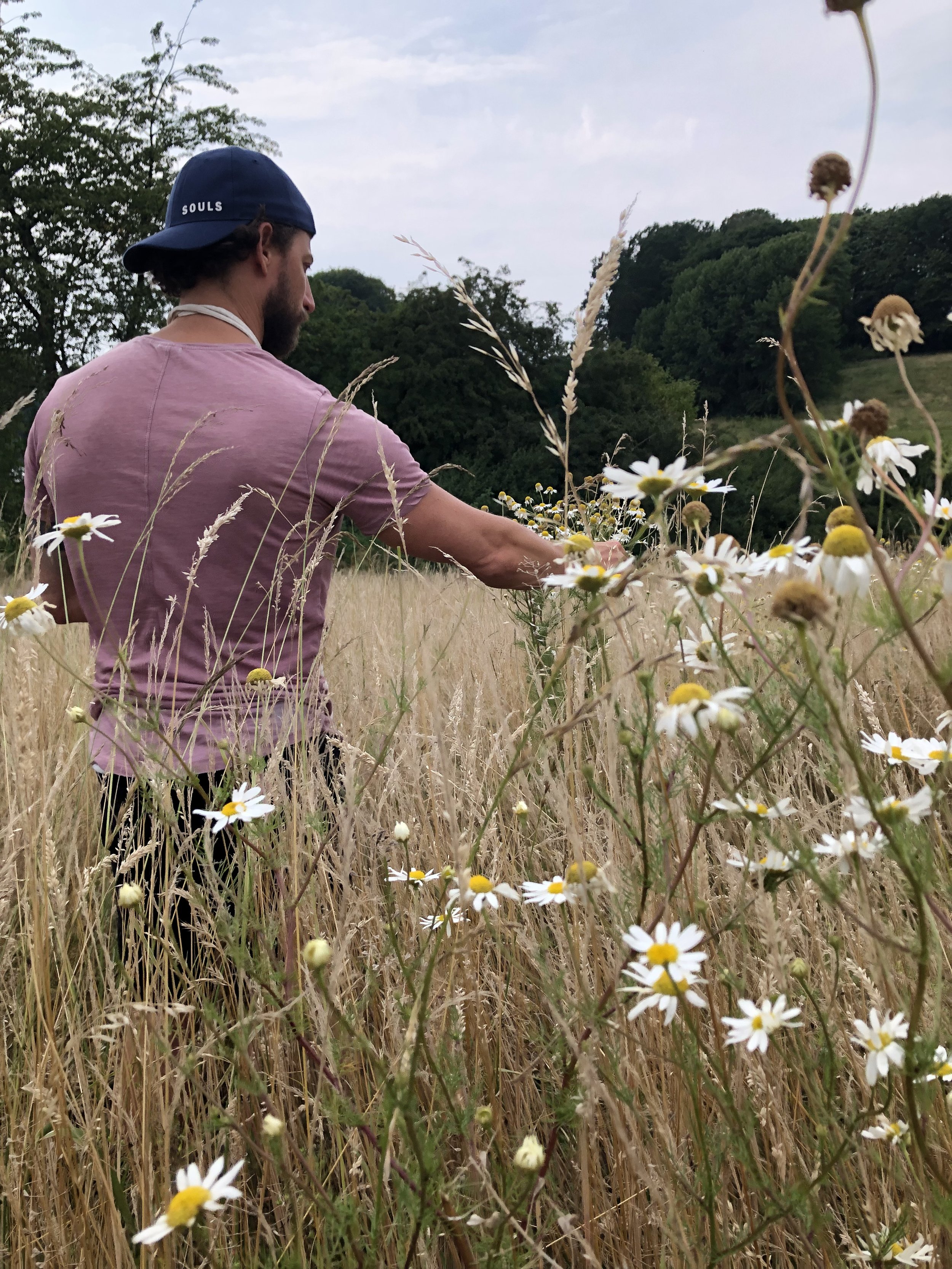
The months of March through to November we spend foraging for the restaurants. Foraging allows us to source some of our menu super locally by gathering goods from the Danish landscape. We pick about 40 different ingredients from Sjælland, Bornholm and sometimes Sweden.
Trained by Noma’s head forager, we follow her mantra of re-introducing the wild outdoors back to restaurants. We forage responsibly - taking only what we need from places of abundance, and plucking some of the produce from their 'tops' encouraging them to grow even more.

KISELGÅRDEN
Our supplier Kiselgården is a biodynamic, organic vegetable farm in Ugerløse, West Zealand, lovingly run by Ask, Amy and their young family. They have focused entirely on vegetable production since 1985, growing everything from cabbage, carrots and potatoes to squash and celery across roughly 100 hectares of clay-rich soil.
Their farming practices include GPS-guided mechanical weeding and seasonal crop rotations with clover and rye: methods developed through decades of experience with organic vegetable farming.

OUR BAR
Our cocktails are a creative and contemporary twist on the classics. Nearly everything on both our food and cocktail menus is made in-house, allowing us to make the most of the ingredients that pass through our kitchen and bar.
Spent wine, tea and coffee grounds are given a second life in house-made liqueurs and vermouths. We don’t use citrus in our cocktails; instead, we ferment our own flavours and acids to bring balance and complexity to each drink.
Our cocktails and back bar focus mainly on Nordic spirits, while our wines come from small, independent vineyards across Europe. Almost all of our wines are organic, with some biodynamic and several distinctly natural.

TABLEWARE
Beautiful colours, character and history. Our plates come from local vintage shop Veirhanen, established in 1973 and located on Ravnsborggade in Nørrebro.
We love giving these pieces a new chapter at Lupa. Imagine the stories they hold, the meals that have been shared over them and how much dining culture has changed along the way. With respect for their history, they now become part of ours.
INTERIOR DESIGN
Developed by Jenia Nelisova

WALL ART
The artwork on our walls is developed by Zane Kraujina and Jenia Nelisova. The idea behind these pieces is intended to simultaneously provide acoustic aid to the room, a nod to our company foraging culture. The materials used are foraged plants, canvas, used wine corks collected from our restaurants and mom’s old towels (behind the canvas - providing extra sound absorption).

The J46 Chair
Our chairs are from FDB Møbler, a Danish furniture design company with a long history of creating functional, durable and beautifully designed furniture. Founded in the 1940s, FDB Møbler has become an enduring part of Danish design history.
The chairs used at Lupa are FSC-certified, while the J46 chair in the restaurant also carries the Nordic Ecolabel.

Our FSC-certified lamps are handcrafted locally by Danish lighting designer Tom Rossau at his workshop on Frederiksberg Allé in Copenhagen. Each piece brings together geometry, materials and light, creating a balance between natural and artificial illumination throughout the restaurant.

OUR TABLES
Our tabletops are made from reclaimed oak from Sandagergaard, an historic farm now part of the Gyldensteen estate on North Funen.
Built around 1700, the farm originally consisted of several timber-framed buildings. When part of one of the barns collapsed during a storm in 2013, sections of the original timber frame were salvaged. The beautifully patinated oak has since been given a new life as the tabletops at Lupa, carrying a piece of its history into a new setting.

Our upholstery is made from post-consumer recycled polyester, using fibres derived from previously used and discarded materials. These are reprocessed and spun into new yarn before being woven and dyed to create the finished fabric.

Our acoustic panels come from our Swedish friends across the water at BAUX. Made from a combination of wood wool, cement and water, the panels bring texture and sound absorption to the space while becoming part of Lupa’s interior design.